Thursday, November 19, 2015

The first time I met Mrs X - Oliver's mother

We had barely gotten the few things we brought to open the new birth center unpacked.    We arranged the birth room and prenatal room.   We knew where emergency kits were and had set up a birth bed and table but we were not yet officially opened.

We arrived Sunday afternoon and by Monday had a full day of prenatal care and machete wounds.   Machete wounds are neat and straight, if you get to them right away.  If you allow them to sit untreated they become an infected mass of puss and scaring.   I had not known this but came to see this but I was new there and this was the day of my first machete wound.  I poured betadine over the wound again and again and put triple antibiotic cream on it. It was too late for stitches and besides I was use to stitching vaginas; not machete wounds.  Later I would put in a few stitches.   Later when I saw how infected they could get and how the children starved if no one went to the farm.   Later when I could no longer see the lines between a birth outcome and the man's ability to farm.

But on that day, looking up from the machete wound, I saw a woman with her husband making her way towards us.  She could barely walk.


The new birth center in Cabestore at dawn with mist still clinging to the mountains


I finished the pouring of the water and tried to get the translator ( a different translator) to help me.   He was restless and did not hold still.  He was from the city and it soon became clear he did not have such a favorable opinion of the  "peasant" community.   It was not what a young, urban, English speaker aspired to.   But he knew the line was not so clearly drawn and the fear of dropping over the edge into such poverty was a day to day struggle of wit and will.

I got that she had diarrhea and it was bad. I rooted through a blue bag where I knew I had packed re-hydration salts.   We used them all the time but this was the first.  I found a bottle and clean water and had her drink some.  She threw up over and over again.  She was lying on the ground in front of the new pink birth center and was having fluids pour out of her.   I gave her anxious husband more packs of de-hydration fluids and told them to go to the hospital.  I said this through a translator who was not paying attention.   Later I would remember this.  Me trying to make sure they knew to go the the hospital, showing them the re-hydration mix and bottle.   The translator walking away and me hauling him back again.

"Are you sure she is going to the hospital? "

"Yes, yes."

But I am never sure.  In the weeks that follow he translates so many things without paying attention and so I am never sure.   It feels too cruel to ask, "Are you sure you told her to go the hospital?"  I ran upstairs and got her a diarrhea pill just to hold her till she got to LasCahabas.

We arrived Sunday and it was only Monday.

Later I would learn to walk upstairs and get 100 gouds and put the sick person on the moto - no going home- no nothing - just go now!

I never saw her again.   The next thing I knew we were walking up the path to her funeral and wondering what to do with the baby.

I had put together some emergency kits to prevent maternal and newborn deaths but there I was with a mother newly dead and a baby with slim chances of survival.

I walked that path many times and as I walked I asked, "Why did she die?"   She had gotten prenatal care at the mobile clinic.  She had not died in childbirth but she had died of an undiagnosed cause and the baby might die too.   In this way, I began to collect clues and conduct an investigation.

In the belief system of many people, a person can put a curse on you.  The translator says the person can send an actual virus or bacteria so it looks like an illness but it was sent by someone.   "Buy who? I ask.

"Sometimes you never know."   He does not have much patience for my questions.   It is just how it is.  He plays music all night long. Between his music and the dogs, it is hard to sleep.   The music keeps the bad spirits away.   I wonder out loud.  Maybe the bad spirit is things people worry about or a past argument or a loss of a good friend or fear.

"More than just that."    he does army calisthenics each morning with the midwives.   The young women at the water pump laugh so hard they can barely stand.  I take it all in - the baby without a mother, the calisthenics and the water pump.

Why did Mrs X Die? A medical mystery of Cabestore, Haiti

This is the story of Oliver; a baby living in Cabestore, Haiti.

His name is not actually Oliver but it is the name the translator gave him, when she wanted to adopt him and now it is the only name I can recall.

Why did your mama die little baby?   

It is the name he was given when his father, still in the deepest stages of grief, brought him to the newly opened birth center for us to care for him.   The translator, had offered to take him home and with the help of other volunteers, feed and love him and make sure he had an education.   When he handed him to her, she found soap and new clothes and washed his hair and put coconut oil over his soft, brown skin.

She took a moto to town, over many streams and rivers to buy formula and bottles.  It seemed a race against time for a baby, in Cabestore, who no longer had his mother's milk.   I have developed a way of looking at baby's skin and hair and development to assess if a baby is exclusively breastfed.  Exclusively breastfed babies in Haiti, are dark skinned with shiny black, soft curls. Despite all our teachings, an exclusively breast fed baby till six months is rare.  It takes constant encouragement.  I doubt Oliver had been given much breast milk during his mother's illness, on top of the cultural norm of broth and food at an early age.  He was already malnourished. He was chubby enough but the chubby of white rice, smashed with a few beans and coaxed into his small mouth.  His skin was too pale and  his hair stiff and dry. He already had signs of skin infections, coughs and wheezing lungs.

He melted into any set of arms that held him.

I first met Oliver at his mother's funeral.   The community health agent invited us and in this way I took my first walk up the trail to his house.    It was hot and sunny when we started out but soon we were standing in a crowded yard amidst a later afternoon downpour  We were invited into the house which was overflowing with children and young men playing dominoes.   It took many funerals for me to understand that young men are suppose to play dominoes at funerals.  How this tradition took root, I do not know but I do know that despite the pouring rain and numerous children, the domino players did not budge.

It grew darker but I could still see the mother's older children, staring at me.    Their mother was gone; buried in the family grave just an hour ago.   I watch the oldest girl, about ten, take her father's hand as the translator is busy offering to adopt the baby.   It does not seem the time to discuss the baby's possible adoption but then again, the baby would need care and food immediately.   There was no sign of food for any one of the many children.

The translator had adopted other children who all lived with her mother in a house in Port-Au-Prince.   It is near to impossible for a white or foreign person to adopt but a Hatien can simply say they are the mother and no one is the wiser.  She had two other children whose mother's had died in childbirth.

I ask the health agent, why the mother died.    He shrugs.  "It was bad spirits."   Later they say, "the grandmother died of bad spirits too."

One daughter and four little boys and a now a baby boy who is just four months old.

I am in Cabestore to help Midwives for Haiti, set up a new birth center.   We are here to help prevent mother's from dying but here she is newly dead and there is nothing anyone thinks could have been done to prevent it.

In the weeks, that lay ahead, I would walk that path many times.    I would ask myself over and over why Oliver had no mother. I mean really, I want to say.  Why did she die and how could it  have been prevented or treated?

I am haunted/inspired by two things.   The television show "House" and the film by the World Health Organization called,  "Why Did Mrs X Die?"

This is the story of Oliver and his young mother but it is also the story of Cabestore and of Haiti; a story of life and death  A slow story;  not a fast paced action story but a slow one in a hot climate with thunderstorms at dusk and market day every Wednesday and Saturday, despite the dyings and birthings that are sung and captured in the mountains.

I write because I too believe in magic.  I hope that if I write this down and send it out into the universe, I will be able to sleep at night.


Sunday, September 13, 2015

The Corn Mother at the Linnton Food Pantry

During the summer of 2015, I decide to help at the food pantry.  It seems an unlikely place for a food pantry but each morning I could see hundreds of people coming by bus or walking or crowding into old cars.  Volunteers picked up food at the regional food bank and brought it to this small, regional community center.  People came pinwheel chairs and with walkers; with children and grandparents.

They did not need anyone else to give out food so I  thought perhaps people would like a few health screenings.  I packed a bag and prepared to do  blood pressures, weights, pulse, blood glucose and oxygen levels.   These are very simple screenings that most people could get in a grocery store.  But it seemed that what they wanted, that the machine could not give them, was someone to listen to their story and I felt honor to listen to their journey; the journey that would bring them to this place of waiting for free food in a small, crowded center squeezed between the river and railroad tracks and highway.  The trains and trucks covered us with a layer of dust and noise.   In a city of lovely parks and old, tree filled neighborhoods, the food pantry sat on a sliver of land that thing hung on for dear life.  

It was a popular food pantry.  People came from far away because, I believe, there was considerable respect and dignity.   I listen to the stories of the homeless, the sick, the injured, the immigrant; people who found themselves without food and wondering why anyhow this happened.  

Almost everyone had high blood pressure and struggled with high blood sugar.  Their health was worn down by poverty and abuses beyond reason.  It was hard to hold their head up high but I could see that the poorest of our communities have a culture of their own.   They are bound together by survival.

This is one woman's story which brings with it the story of her birth.


A thin, anemic woman sits down and sighs.   Her strength shines through the fatigue.  She is still laughing and has grown tough and determined.  She is there with a friend.  They took tri-met to get there and smoke outside until their number is called.  She tells me her story; kids, grandkids, evicted, abused.

"I had to be tough" she explains.  "I was born in a cornfield." I listen carefully.

"It was summer and the corn needed picking so my mother went up into the corn field and I just slipped out before she could get back to the house. "

I ask if she and her mom were okay and she says she guesses so.

"Born in a corn field."   She shakes her head.   "They were poor too, like me."

I tell her that women all over the world gave and give birth in the midst of harvest.   I tell her, why I have met women who gave birth in rice paddies and gathering turmeric and ranching.   I had read Pearl Buck's Good Earth and was so surprised she had a baby in the rice field.  Now I can see that all over the world. women give birth during harvest.   They pick the baby up and head back to the house with the best harvest of all - the baby.   Later some one will go get the corn or rice or roots they were working on.   She will go to bed and be given tea and forever the baby will be told the story of birth in the midst of harvest.

 I thank her for the story.   I think of her mom with four other young children trying to get the corn in.  
Too busy to feel the contractions and the baby small and willing,:coming fast.  I think of the baby born with the sky blue above her and the birds calling and the corn singing to her.   It was a great morning to be born, I tell her.   I tell her that the mom was a Corn Mother and she says she never thought of it like that.

To the woman born in the corn fields of Oregon.  May she know how beautiful she is and how strong and mazing her mother was.


Mothers waiting for the Revolution


I wonder if mothers and babies need to wait for the revolution- or if creating a society where pregnant women and their young are cared for is the revolution?

The people I met in the mountains there in Southern Mindanao, are now my Facebook Friends and I watch them from time to time slip into view.  Sometimes they send me a message or greeting.  Sometimes they are involved in a political protest or an evacuation and other times there are photos of fun times with friends and family.  They fall in love and go to beautiful places amongst the outrage of injustice.

The people who connected me with them, have not yet met with me.   Times are set but never kept and the weeks slip by.    At first the people are so close to me, I can feel them all around.  I am desperate to do the simple things I promised.  I did not want to just go and then come back and forget them.  I pick very simple, very easy to accomplish tasks.   I make a pack of pictures to show people.   At first, I thrust the photos in visitors line of vision, and they look with some curiosity but I can tell it does not seem particularly real to them.   I quietly grieve the loss of these new friends.   I want to sing and be with them.

I had wanted to help them get Vitamin Angels.  It is so simple.  A short application but I need an organization.   My children say, "If you need an organization to help mothers and children in the Philippines, you should start your own."

I say, "But it already exists.  We just have to fill in the space on the application.  I'll do all the work."

But they never give me the information.   I call, email, text but it never happens.

They say there are more important issues than maternal and child health.   They say, "How can they worry about maternal and newborn health when they might be killed?"

I reply, "More are dying in childbirth and in the first five years of life.  "   No one ever answers.

I have a pile of things to send with the next visitor from Portland but they go without theses things and eventually I put them aside.

I look up the political situation.   The people are being manipulated by many foreign and local forces.   People in Europe fund "health care and schools" but it is all in the name of a revolutionary force.  They call the shots from afar, creating training camps and centers that are the face of the revolution.
They try to keep the communist revolution alive.   After this, they will tend to mothers who bleed to death or babies who die on political marches from the mountains.   Later.

I do not know enough about the political situation but I know that when mothers are safe to have babies when the choose and marry who they choose and are pretty sure their babies will live and grow up to get an education and will have food; that this will be revolutionary.

You can not simultaneously have forced child marriage,  a disregard for women's health and a revolution dedicated to equality and social justice.   Handing out prenatal vitamins and training health workers in basic life saving techniques, is not a Che moment.  It is too ordinary.  

But it is my revolution.  The one I have struggled and fought for all these years.   Tell me how you treat a woman who is pregnant . Tell me how you will treat her children and I will tell you the state of equity and social justice in your community or country or in the world.

The saying goes,  There is no way to peace.  Peace is the way.  There is no way to revolution.  Revolutions the way.

I only visited one small part of a vast network of islands.   Islands that were gathered  up and made into one country without understanding or consent.   My friends in the those communities wake up and have coffee over a fire and sweep the yard and begin their day, even as I drink tea and sweep and begin my day.

I wave the revolutionary flag of prenatal care and safe transport for all women.  I pack the weapons of clean birth kits and respect for women's reproductive health.   There are midwives in the revolution - women and men who support them, marching for this basic building block of social justice.  People who know that safe birth can not wait for political victories.  It is now.  One birth at a time.

Sunday, May 24, 2015

39,000 girls under 18 will marry today.


Child marriage is defined by the United Nations as any child who marries before the age of18.  It is estimated that 39,000 girls under 18 will marry today.

Between 2011 and 2020, it is estimated that 140 million children will be married and of those 50 million will be under the age of 15.

One half of all the girls in South Asia will be married before they reach their 18th birthday.


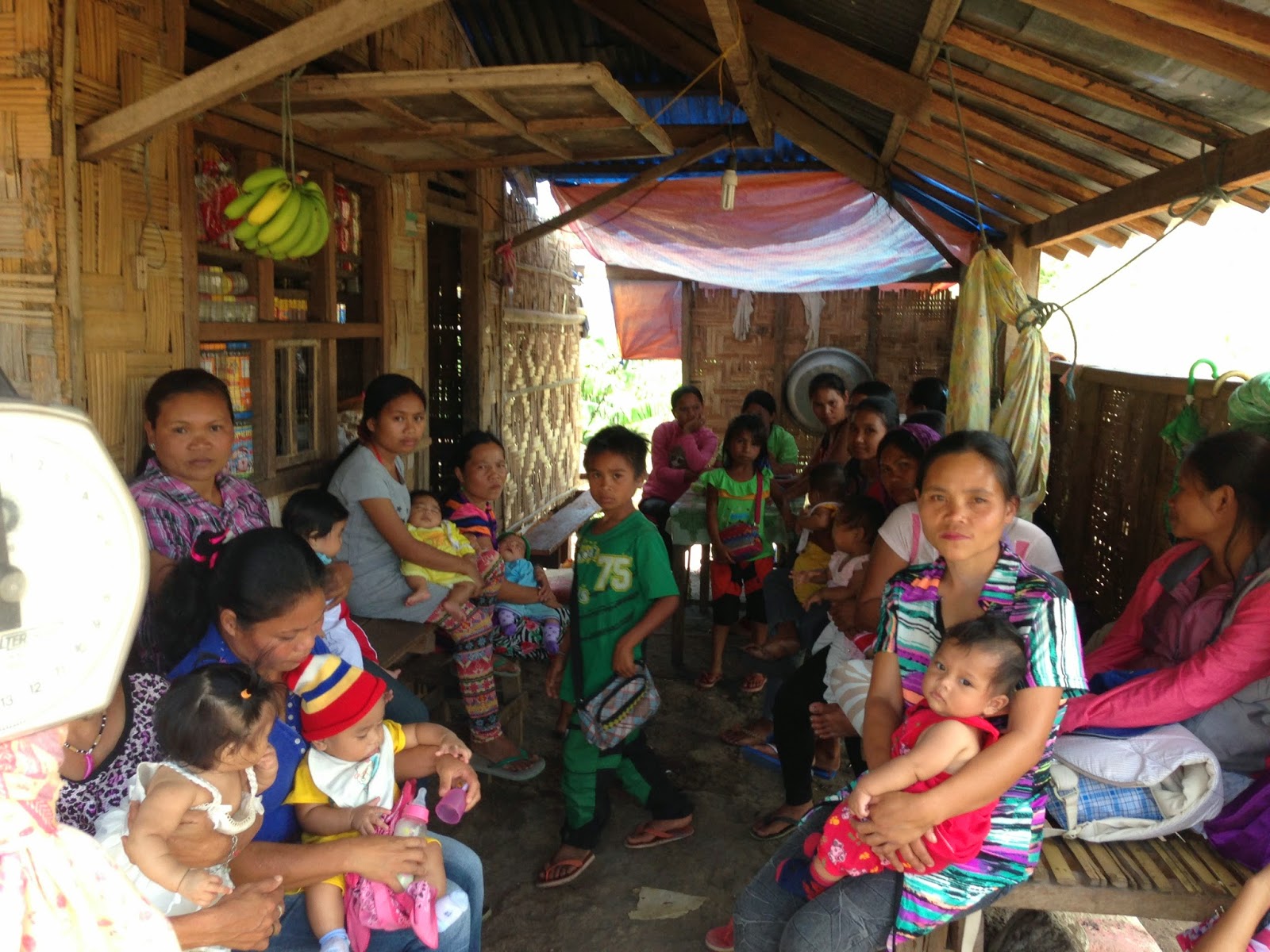
These women walked several hours to wait for a government midwife to immunize their children and get prenatal care.  They wait at a small store and if she does not come, walk home again and try the following month.   There is no care in their villages.  Mostly they come for immunizations.


When I am there, in a small community, I offer prenatal care and work with the community health workers and Gigi, the newly graduated midwife.   I ask a young woman who is only 14 if this is her first pregnancy.  "No" she answers.  "I had one other who died."    "When?"  I ask. She looks at me and says, "The day he was born.  That day."   I wonder why.  "Did he cry at birth?"  "Yes, she says."

I ask who the midwife was and she answers that her husband delivered the baby.   

"Oh."  

She is fourteen, pregnant for the second time and has already lost one baby.  They tell me that the girls are frequently given in marriage for a dowry such as two horses or some other thing the family might need.  The  men are older and perhaps have other wives or children.   

The next day, I have a women's circle and we talk about birth and some things that might help in an emergency.   I suggest having a first baby after 18 but they laugh.  This is not possible.   They are married between 11 and 14.  


Wednesday, May 20, 2015

Mountains and Motherhood and Midwives


Childbirth in the mountains


s
Twenty-seven percent of the earth' s surface is mountains and these mountains are home to over 720 million people.   They are also some of the poorest people on earth and the place where far more women and babies die in childbirth.

In many countries that I have visited, the mountains were the places that people fled to when escaping slavery, state making and colonization.   The people down below in the valley land see them as living ancestors; carrying with them the traditions and knowledge of the past.  Most people originally lived closer to the coast where  trading, better soil and more opportunities for growing and hunting for food existed.

In Haiti and as in the Philippines, when the Spanish came some died of disease and were enslaved and some escaped to the mountains.  They were sometimes known as maroons; people who escaped from slavery and went to live in the mountains.   Brave and resourceful they came to make the unwanted land of the mountains their home.  They learned to farm, hunt and build communities high in the crevices of these places.

There were and are still are few roads.  Paths connect communities and are often a long way from the road.

In the Philippines, they ask what is to be done about our poor maternal health rating?

"It is" I say,  "A matter of mountains."

"Mountains?"

"Yes, mountains.   The women can not get down when they need help and no one wants to bring care to them so far up in the mountains.  It is matter of roads and people."

The governments hope that the women will come down.  They plan for waiting homes and birth homes but they are far from the mountain communities and difficult to get to.  They must leave farm and family.

But it is not just roads, it is that the mountains are fragile ecosystems and things like mining and deforestation destroy their source of food and cause severe starvation and malnutrition.  Streams are filled in by landslides destroying a source of water.

There is also war.   I think of the sandy roads of Cambodia that offered many,well staffed rural health centers.   The roads were flat and easy to use.   People road bikes and walked and healthcare was greatly improved in this landscape.  But even there, high in the mountains, on the border of Thailand and Cambodia, soldiers camped with their families and in that place- that place of on-going conflict, the women had no access to care and were far from help, should it be needed.

In the Philippines, a people fearful of the army and foreign mining companies, have difficulty worrying about birth.  The government says, "Come down out of the mountains and give birth down here."

They threaten them with fines; fines for the mothers and fines for the traditional midwives.  A woman at a small store says, "They just more further into the mountains where no on will bother them."

When I teach a workshop, usually for the traditional midwives, all the women, children and some men of the village come.  I can see from their stories that there, everyone is the midwife.  Anyone could find them self beside a woman giving birth; on the road, in a field or by the water.  They tell me that there in the mountain they all need to know.

On my way down the mountain, the motorcycle weaves around many new landslides and through mud from hard rains.  It is a long, hard ride and even when we get to the main road, it is a long way still to the nearest birth center and even there the midwife is gone and would not be there, even if the woman had made that long journey or could have afforded the motorcycle ride on a day when the road was not washed out.

I too, live on a mountainside.   I am 67 and people sometimes say, "I am afraid to come up there on that road to see you" and sometimes friends say "maybe it is time to move off that mountain."

Other times, I sit on a rooftop in LaGonave or sit by the school in Mindanao or sit on my little mountain and look out.  Buried in the mountains, we can see lights in the distance and know there is a life  out there.

A doctor says , "And how is America?  " I consider and say., "It is big place so its hard to say but I live on a dirt road on a little mountain and look out at the dusk creeping over the valley.  I have chickens and sheep and the children run and do not want to stop playing. "   She can see it is much the same.  But it is not.   The army has never once come up my mountain and if they are mining this mountain range it is not on my land and mostly never could be.  I can get in my car easily, and drive to town.  When my grandchildren are born on the side of this mountain, I can easily get down in an emergency.


I look at the group gathered to ask what I think about maternal health in the Philippines and I consider the question.  "Mountains.  You have to have a plan that considers the mountains and the people who live there; not one just for getting them down but one that respects their culture and their need to be near family and farm.  I think the midwives have to go to the mountains."


Monday, May 18, 2015

The Ladder System of Midwifery in the Philippines

The Ladder System in the Philippines - from Midwife to Doctor


This is my friend, Gigi, who lives and works and volunteers in the Philippines.  I spent my first week in Mindanao with her.  She has just finished her third year of midwifery school and was suppose to volunteer in the summer before she started a  year of nursing school in the fall.  

She and her other class mates are part of an amazing program, in which they complete three years of midwifery school and then can go on to complete a year of nursing school and then go on to medical school.  They can stop at any point in the program or just keep on going.   To qualify they must be chosen by their community or Baranga.   She was chosen for her obvious enthusiasm, intelligence and dedication.  

Her school is a large modern building. It is great, but what is amazing is the village of traditional houses across the field where all the students live, cook and study.   It is a remarkable model of improving healthcare in remote communities.   

Gigi and I had so much fun together.  We did prenatal care and taught classes and gave presentations as well as so much singing and riding motorcycles up to the communities and cooking and telling stories.  What was so impressive about her and the community health workers, was their true wish to help their communities and a sense of volunteerism.  She is becoming a doctor, via becoming a midwife and a nurse but her mission seemed so much larger.  It was to make her country a better place for everyone and most all of all those who have the least. She is eager to understand her country's history and the culture of the people she serves.  

There is much that can be said about maternal health in the Philippines but I want to start with this amazing woman and her path to becoming a doctor.   Her courage was as big as her heart and her smile.   


You may be surprised that it starts with 3 years of midwifery.  I think its inspiring  because its basically saying," let's start at the beginning of life and get that right."  A midwife also does many things including prenatal care, births, immunizations and family planning.  Each midwife there covers a large area that includes many remote villages.  There job is very hard, even with the help of community health workers from the World Health Organization.  There is no doubt that when Gigi graduates her community will be so happy to have her.  As part of the program, she made a commitment to stay in her country and return to her rural community.  


**** Just a note of caution, the Philippines did not meet the millennium goals in maternal and newborn health and the communities we visited had no prenatal care and no access for transport or even trained traditional birth attendants.  It is currently agains the law to have you baby at home with no ability to serve women in birth centers that they can have access to.   Gigi is part of the solution but in the mean time there ei much that can be done.